Honda Key Won't Turn? How to Tell If the Ignition Cylinder Is Wearing Out
A key that needs a wiggle to start the car is telling you something, and you usually have more options than replacing the whole unit.
September 30, 2026 · 4 min read
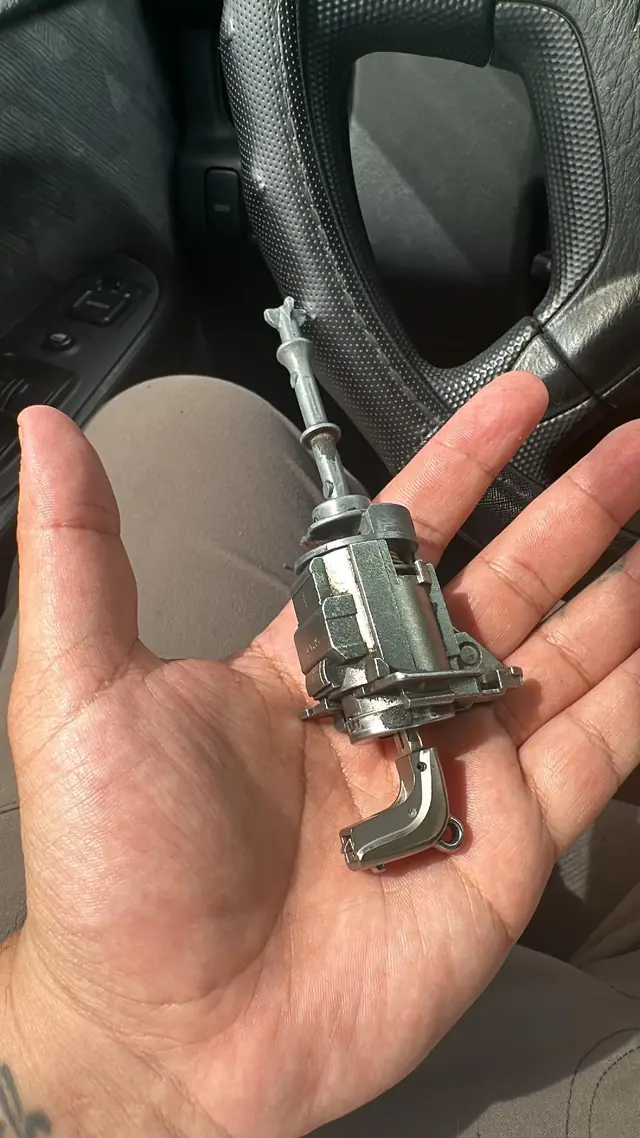
It starts small. One morning your Honda's key takes an extra second to turn. A few weeks later you're wiggling it up and down to get the dash to light. Eventually it won't turn at all, or it turns but the engine doesn't crank, or the key hangs in the accessory position and refuses to come out.
That's a worn ignition cylinder, and it's a very common repair. It's also one where you have more choices than most people realize. The sign on the front of our shop says we rebuild Honda ignitions, and there's a reason it's up there: plenty of drivers come in assuming the only fix is a whole new unit.
What the ignition cylinder does
The ignition has two parts people tend to lump together. The lock cylinder is the small brass barrel your key goes into, and it works like any other pin tumbler lock. Behind it sits the electrical switch that actually powers the car and engages the starter. Turn the key and the cylinder rotates the switch.
The cylinder takes a beating. Think about how many times that key gets turned in ten or fifteen years, often with a heavy keychain hanging off it, pulling down on the lock every time you drive over a bump. The internal pins and wafers wear, the key wears to match, and the two stop fitting each other properly.
Signs the cylinder is wearing out
- The key has to be wiggled, lifted or pressed in to turn. This is the classic first symptom.
- The key turns but doesn't come back out of the accessory position without coaxing.
- The key goes in loosely, with a lot of play, or falls out of the cylinder too easily.
- You can turn the key a little, then it stops as if a stop were blocking it.
- The dash lights flicker or the car starts only some of the time, and moving the key changes it.
- The key turns the cylinder but the engine doesn't crank, even though the battery is fine.
Notice that some of those are lock problems and some are switch problems. A technician can usually tell the difference in a few minutes, which matters because it decides what needs fixing.
Check the simple stuff first
Before you assume the ignition is failing, rule out a few cheaper suspects. Try your spare key. If the spare works smoothly and the old one doesn't, your everyday key is worn, and a fresh copy may solve everything. Look at the key itself for bends or rounded cuts. Take the extra weight off your key ring and see whether it behaves better. And on cars with a steering column lock, turn the wheel slightly while turning the key, since a bound steering lock can feel exactly like a bad ignition.
Rebuild or replace: what's the difference?
Replacing means swapping in an entire new ignition assembly, and on many cars that can also mean new keys and, depending on the vehicle, reprogramming so the car recognizes them. It works, but it's the bigger job.
Rebuilding means taking the existing cylinder out, opening it up, and replacing only what's worn: pins, springs, wafers, sometimes the retaining pieces. It's then reassembled and fitted back in. When the cylinder body is still good, a rebuild can bring back the original feel and keep you on your existing keys. The photo with this article shows a removed ignition cylinder held in a hand, which is exactly the part we're talking about.
Whether a rebuild makes sense depends on the year, the condition of the cylinder and what's actually failing. We can't promise it from a blog post. What we can do is look at yours and say plainly which way makes sense. Ask us for a quote on both.
What to do when it starts acting up
- Stop forcing it. Yanking or hammering on a stuck key can snap it off in the cylinder, which turns a small repair into a bigger one.
- Use your spare key and see whether the behavior changes.
- Don't spray heavy oil into the cylinder. Dry graphite or a lock-safe lubricant is the better choice, and even that is a temporary help, not a cure.
- Bring the vehicle in before it strands you. A cylinder that sticks today can refuse to turn tomorrow.
- Have the keys you use on hand, including the spare, so they can be checked against the cylinder.
Don't wait for the dead end
A worn ignition rarely fixes itself, and it usually gets worse at the least convenient time. Catching it while the car still starts gives you time to choose between a rebuild and a replacement, instead of choosing whatever's fastest when you're stuck.
If your Honda's key is starting to fight you, call 509-586-9300 or stop by 415 W 1st Ave in Kennewick. The counter is open Monday through Friday from 8:00 AM to 5:30 PM, and the phone line takes emergency calls any hour.
Mount's Lock & Key, 509-586-9300
Call 509-586-9300More articles
Why Your Duplicate Key Sticks, and What a Good Cut Looks Like
If you have to push, pull and wiggle a new key to get it to turn, the copy is almost always the problem.
Forgot the Safe Combination? What Happens When a Locksmith Opens It
Most people assume opening a safe means a drill and a wrecked door. Often it doesn't.