Why Your Duplicate Key Sticks, and What a Good Cut Looks Like
If you have to push, pull and wiggle a new key to get it to turn, the copy is almost always the problem.
September 30, 2026 · 4 min read
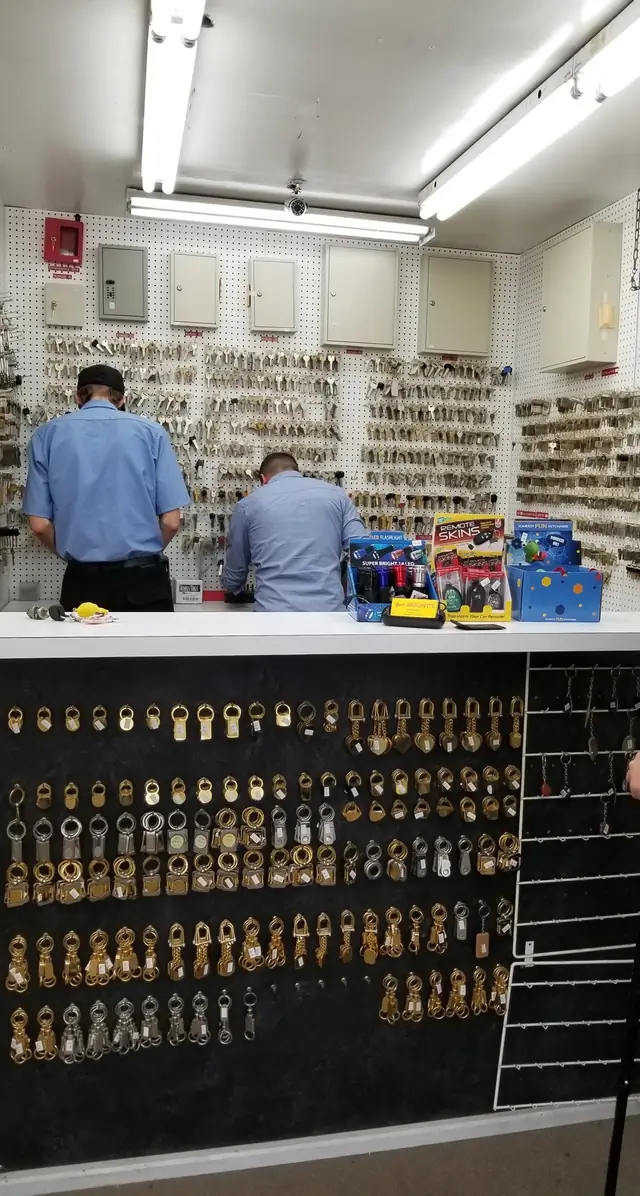
You had a spare cut, and it works, sort of. You slide it in, back it out a hair, give it a little wiggle, and the lock finally turns. Most people figure the lock is getting old. More often the lock is fine and the copy is the problem.
A good duplicate should feel like the original. It goes in smooth, it turns on the first try, and it comes out the same way. If yours doesn't, it's worth understanding why, because a key that needs coaxing will eventually stop working at the worst possible moment, usually in the dark with groceries in your arms.
What a key is actually doing
Inside a typical pin tumbler lock there's a stack of small pins sitting in a row. Each pin has to be lifted to exactly the right height so the gap between the pins lines up with the edge of the cylinder. When every pin lands on that line, the cylinder is free to rotate. The cuts on your key are the instructions for those heights.
The tolerances are tiny. We're talking about thousandths of an inch. A cut that's a hair too shallow leaves one pin slightly short, and the cylinder binds. A cut that's a hair too deep does the same thing from the other side. That's the push, pull and jiggle: you're dragging the pins up or down by hand until they happen to line up.
Where copies go wrong
A duplicate is only as good as the key it's traced from. If the original is worn, and a key you've used every day for ten years certainly is, the copy inherits the wear. Then the machine adds its own small error on top. Copy the copy, and the error grows again. By the third generation you can have a key that barely resembles what the lock wants.
- The key blank was the wrong one. Blanks look alike but differ in the shape of the groove along the blade, and a near match can bind in the keyway.
- The original was worn, so the copy picked up rounded, shallow cuts.
- The machine's jaws weren't clamped square, so every cut came out at a slight angle.
- Burrs were left on the fresh cuts. Those little metal slivers catch on the pins and feel exactly like a sticky lock.
- A copy was made from another copy instead of from the original or from the lock's key code.
One customer told us that our duplicates always work and, in their words, do not require you to push and pull the key to get it to turn. That's the standard we try to hold ourselves to, and it's a fair one for any shop.
What a good cut looks like
You can judge a fresh duplicate before you leave the counter. Hold it next to the original, blade to blade, and sight down the length. The cuts should line up in depth and spacing. The shoulders, the steps between cuts, should be clean and crisp, not smeared. Run a fingernail along the edge of the blade: if you feel a rough lip, there are burrs, and the key should be cleaned up before it goes anywhere near your lock.
Then test it, preferably in the lock it's meant for. It should slide in without resistance, turn without you leaning on it, and pull out freely. If the shop has the chance, it's smart to try the copy in the door while you're still standing there. A quick check at the counter beats a trip back across town.
When the lock is the problem after all
Sometimes the copy is perfect and the lock really is tired. Here's how to tell. If the original key has started to stick too, or if both the original and the copy work fine in another lock with the same brand of keyway, the lock itself is suspect. Dirt, old graphite, a bent pin or a cylinder that has worn oval can all cause it. A drop of the right dry lubricant sometimes helps. Heavy oil usually makes things worse, because it gathers dust and turns into paste inside the pin chambers.
If the lock is the culprit, there are a few ways out: cleaning and servicing it, rekeying it, or replacing it. We'd rather look at it and tell you straight than sell you a new deadbolt you don't need.
A few habits that make better copies
- Copy from your best key, the one that's been used least, not the one that's been on your ring for a decade.
- If a key is already sticking, say so when you hand it over. It may need to be cut from the lock's code rather than traced.
- Ask for a test. A shop that does good work won't mind you trying the key in the lock.
- Mark your spare so you always know which key is the master and which is a copy. When something goes wrong, you want to know which one to blame.
- Replace keys that look bent, rounded or chipped before they break off in the cylinder.
Keys wear out the same way shoes do: quietly, then all at once. A fresh, clean copy made from a good original can last for years without a complaint.
If you've got a key that sticks, or a stack of spares that don't quite behave, bring them to the counter at 415 W 1st Ave in Kennewick, Monday through Friday from 8:00 AM to 5:30 PM. You can also call 509-586-9300 and ask a question before you make the trip.
Mount's Lock & Key, 509-586-9300
Call 509-586-9300More articles
Honda Key Won't Turn? How to Tell If the Ignition Cylinder Is Wearing Out
A key that needs a wiggle to start the car is telling you something, and you usually have more options than replacing the whole unit.
Forgot the Safe Combination? What Happens When a Locksmith Opens It
Most people assume opening a safe means a drill and a wrecked door. Often it doesn't.