Master Key Systems for a Small Business: Who Holds Which Key
A good key system means the owner can open everything, each employee can open only what they need, and nobody is carrying a pocketful of keys.
September 30, 2026 · 4 min read
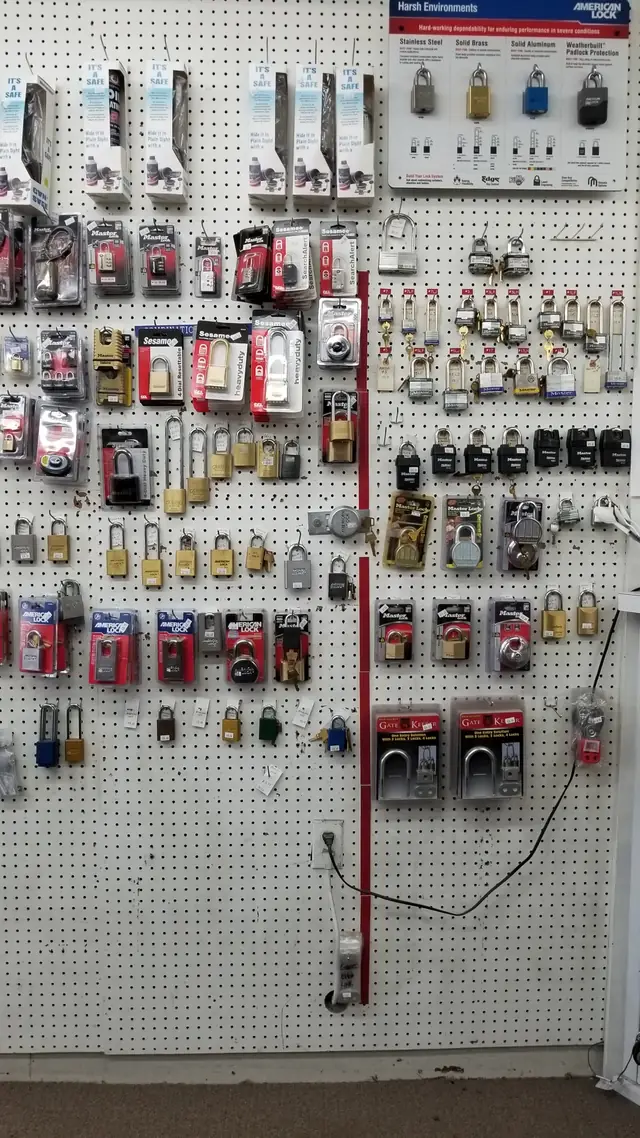
Most small businesses start with a handful of keys and a drawer. A key for the front door, one for the back, one for the office, and whoever needs in gets a copy. A few years and a few employees later, nobody's sure how many keys exist or who has them.
A master key system fixes that. It's one of the commercial services we handle, along with lock installations and access control, and it's far less complicated than it sounds once you see the structure.
How a key hierarchy works
In a master key system, each lock can be opened by more than one key. Every door has its own individual key, often called a change key, that opens only that door. Above those sits a master key that opens a whole group of doors. Above that there can be a grand master that opens everything.
It's done by adding a second set of pins inside each lock, so two different cut patterns can both line up. That's why the lock is built for the system from the start. You can't usually turn a regular lock into a master keyed one by wishing; it gets set up by a locksmith with the right parts and a written plan for how the keys relate.
Who gets which key
The idea is simple: give people the least access that still lets them do their jobs. A picture helps. Picture a small office with a shop behind it.
- Owner or general manager: the grand master, opening every door in the building.
- Office manager: a master for the front office, file room and supply room, but not the shop or the owner's private office.
- Shop lead: a master for the shop, the tool crib and the back dock.
- Regular employees: a change key for the one or two doors they use every day.
- Cleaning crew or contractors: a key for the specific doors they need, and only while they're working for you.
Your layout will differ, and that's the point. The hierarchy should reflect how your business actually runs, not a template. A conversation about who goes where and when is the first step of any good system.
Restricted keyways and key control
Here's a problem a hierarchy doesn't solve on its own: anybody can walk into a hardware store and have a key copied. If your master key can be duplicated at a kiosk in five minutes, the whole system is only as secure as your employees' honesty and memory.
A restricted keyway answers that. It's a lock and key design where the blanks aren't sold freely. The keyway profile is controlled, so a copy can only be made by the shop or authorized dealer that holds the records. You trade a little convenience for control: a copy requires signatures from the people you've authorized, instead of a quick stop at any key counter.
Key control also means keeping a written record: who holds which key, when it was issued, and when it came back. That record is boring until the day it isn't, which is usually the day a key goes missing.
When to rekey after staff turnover
People leave. Most leave on good terms and return their keys. But you can't always be sure a key came back, and you can't be sure it wasn't copied before it did.
Rekeying changes the inside of a lock so the old key no longer works, without replacing the lock itself. It's usually the more economical answer. Whether you need it depends on who left and what they could open.
- Left badly or under dispute: rekey the doors they had access to, promptly.
- Held a master or grand master key: treat that as the most serious case, since one key opened many doors.
- Never returned their keys, or you can't say for certain that they did: rekey.
- Left on good terms and handed everything in: a record check may be enough, but think about how long they had keys and how many doors they reached.
- Lost a key themselves: don't wait to find out where it landed.
With a master key system, a rekey can often be done in a planned way so only the affected part of the hierarchy changes. That's one of the quiet advantages of setting one up properly: you don't start over every time somebody quits.
What to bring to the first conversation
A rough floor plan helps, with the doors you want keyed marked. Bring a list of who works there and which areas they need. Mention anything that's bothered you, like keys nobody can account for, or employees who've been handed the same key as the owner for the sake of convenience. Pricing depends on how many doors and what hardware is involved, so call for a quote.
If you're running a business in Kennewick, Pasco or Richland and your key situation has grown into a drawer of mystery keys, give us a call at 509-586-9300 or stop in at 415 W 1st Ave in Kennewick. We'll help you draw up a plan that fits the way you actually work.
Mount's Lock & Key, 509-586-9300
Call 509-586-9300More articles
Why Your Duplicate Key Sticks, and What a Good Cut Looks Like
If you have to push, pull and wiggle a new key to get it to turn, the copy is almost always the problem.
Honda Key Won't Turn? How to Tell If the Ignition Cylinder Is Wearing Out
A key that needs a wiggle to start the car is telling you something, and you usually have more options than replacing the whole unit.